Repairs to Fireball 14877
|
|
1 October 2010
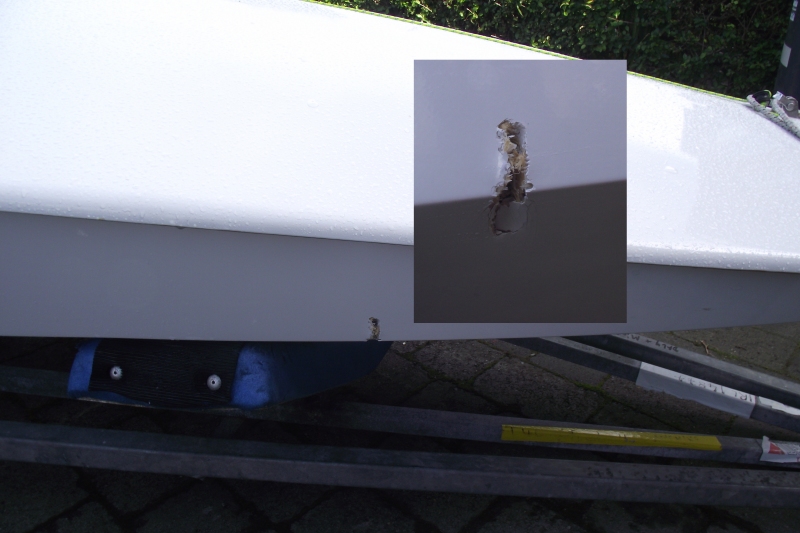
The boat got a bad knock to the starboard forward chine during the end of season event at Dunmore East. Crew had a
bad capsize in heavy airs. The damage may have been caused by a tow rope from a rescue rib, or the rib itself, or
something sharp and hard at the slipway. No matter, needs to be fixed. Crew reckon it is not leaking into the
forward buoyancy tank. |
 |
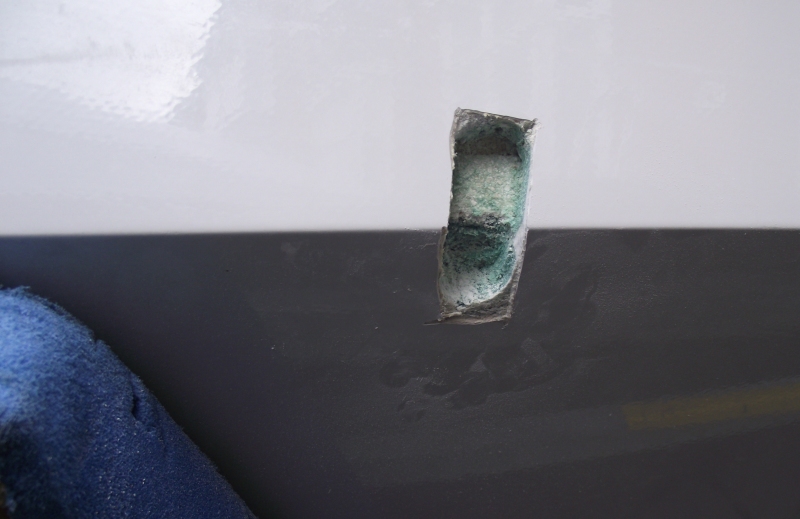
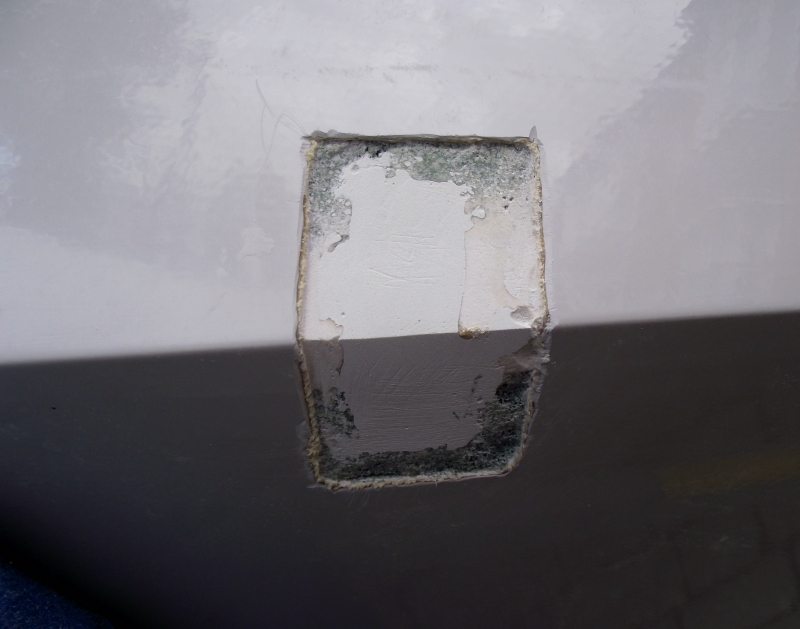
A few minutes with Mr. Dremel, using a grinding wheel and a bit of sanding shows the inner skin is not broken. Good
news. Several repair options: some might bung in a load of marine filler, others might bung in a load of
glass fibre "kitty hair" to fill the void. I don't like those methods because they each create a very hard spot
repair. Hit the chine again and the hard spot will definitely puncture the inner skin. |
 |
|
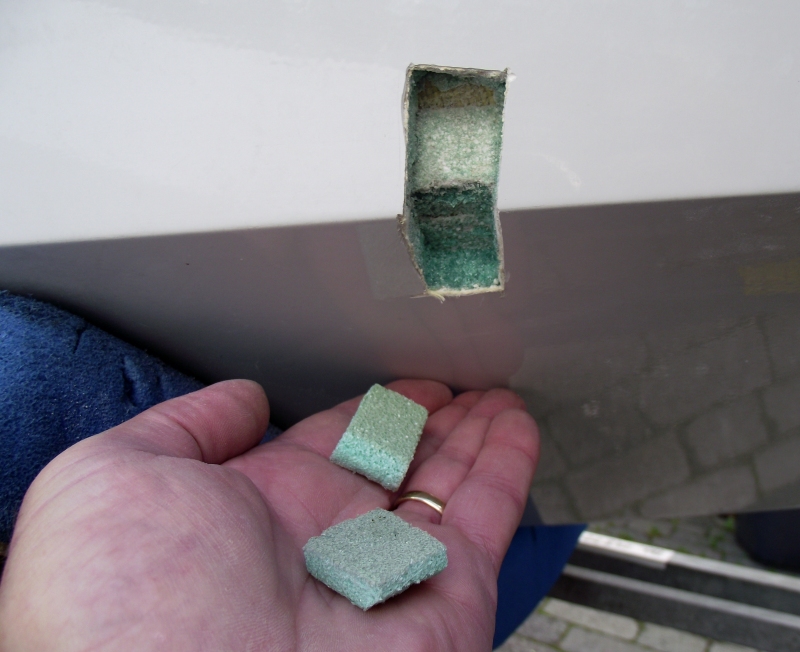
I prefer to fill the void with foam, the material used in the original layup by Guy Winder. I have cut two pieces
with chamfered edges at the chine. You can just see the Kevlar outer skin, a strong material but a bit of a pain to
repair because you can't sand it, Kevlar turns to fluff.
|
 |
|
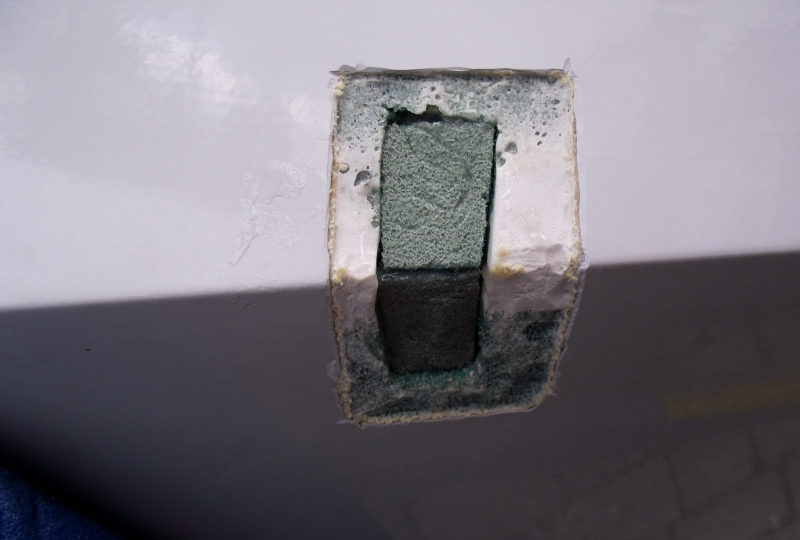
The two pieces have been glued into place using WEST 5-Minute epoxy, also known as G-Flex. It is a viscous quick
drying epoxy that fills any voids between the pieces of foam. An additional surrounding area of Kevlar has been
stripped away to provide a surface for glass cloth to cover the lot. The yellow kevlar edges are easy to see.
|
 |
|
A small bit of two part quick dry marine filler was the applied over the foam, then sanded to provide a smooth surface
for a layer of glass fibre.
|
 |
The layer of glass fibre needs to be tightly compressed to the foam and filler. I don't have a vacuum system so I
will use a compressing method to make certain the glass layer is tightly glued in place. Two pieces of credit card
plastic have been cut to fit on top of the glass layer. Brown packaging tape has been stuck to the two pieces.
Epoxy resin will not stick to the tape. |
 |
|
Here you can see the hinged pieces fitted around the chine and into the repair.
|
 |
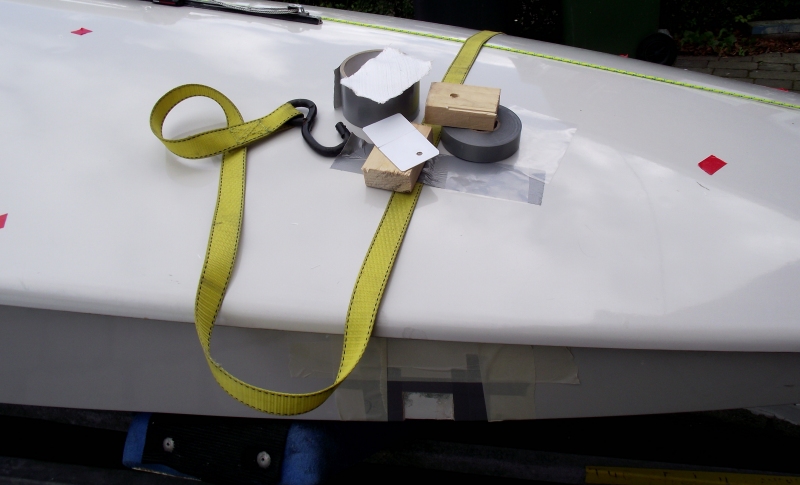
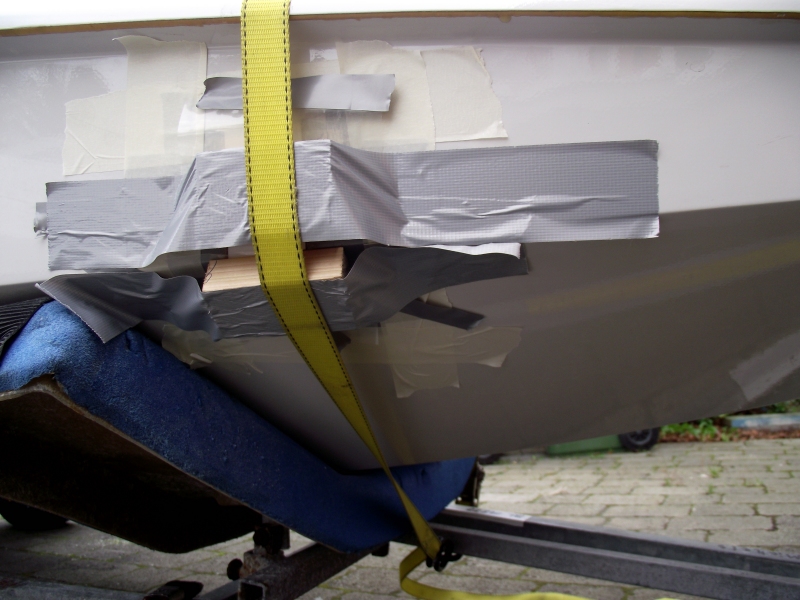
Below are the materials needed for a tight compression of epoxied glass fibre: the hinged plastic cards, some polythene,
two blocks of wood, duct tape, insulating tape and the yellow ratchet strap. |
 |
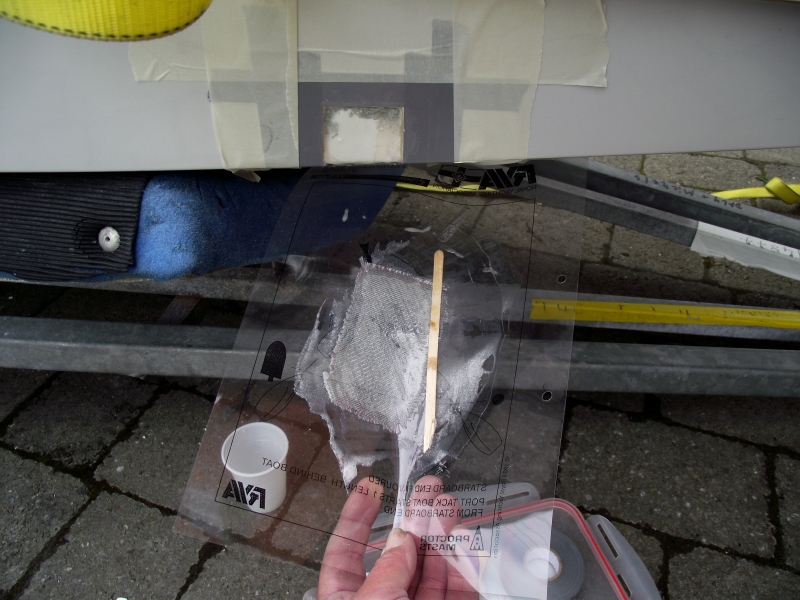
The area around the repair has been masked with insulating tape (epoxy will not stick to it) and masking tape to catch
any epoxy over run. The repair area has been wetted out with epoxy resin and the glass cloth has been
pre-impregnated with epoxy on a piece of acetate (an old overhead projector sheet). The glass cloth was cut from
the larger roll of cloth "on the diagonal" so that the warp and weft will cross the chine at 45 degree angles for increased
strength. |
 |
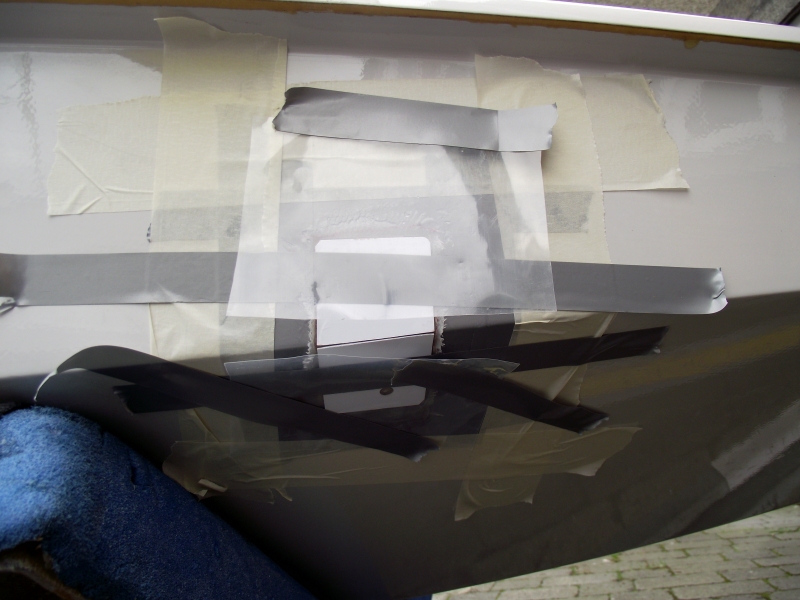
The glass cloth has been put into place and the hinged plastic card are held in place with insulating tape. The
glass cloth is a small bit bigger than the repair area and I will cut away the excess when cured. Two pieces of
polythene have been taped to cover the entire area so that any epoxy over run will be contained. |
 |
The two wooden blocks were put in place and held temporarily by duct tape until the ratchet strap could be tightened.
This serves to compress the glass cloth into place on top of the foam and filler. |
 |
The next day, the epoxy has cured and all of the compression pieces have been removed. You can see the glass cloth
neatly glued in place with over run areas ready to be ground away by Mr. Dremel.
Then lightly sand the glass and brush on new gelcoat, let it cure, then sand, sand
and sand some more! |
 |
And there it is, smooth and sparkly and ready to roll. |
 |
Go Back to Boat Maintenance |


